

The Digital Trap That’s Costing You Patients
I watched a successful chiropractor lose three long-term patients last month. Not because of poor treatment, but because he was too busy managing his social media to return their calls promptly.
Sound familiar?
The Crisis: Marketing is Overpowering Medicine
Here’s the harsh reality: While you’re crafting the perfect Instagram post about spinal health or responding to every Facebook comment, your competitors are providing the human connection and timely care that keeps patients loyal.
The numbers don’t lie:
- Many practice owners are dedicating 10 or more hours each week to digital marketing tasks—time that could be spent seeing patients or resting.
- Nearly 80% of content creators report experiencing burnout from the pressure of constantly publishing, a burden that drains your energy for patient care.
- Meanwhile, nearly 80% of patients still consider the phone channel important for communication with businesses, especially for high-stakes decisions like urgent appointments or complex care questions.
Where Your Time Actually Creates Value
Your expertise—your ability to diagnose, treat, and heal—is your most valuable asset. Protect it by prioritizing high-value, patient-focused activities.
High-Value Activities (Do These Yourself):
- In-person patient consultations and evaluations
- Building referral relationships with local physicians
- Strategic practice planning and financial reviews
- Closing high-ticket care plans
- Solving complex patient problems
Low-Value Activities (Outsource These):
- Scheduling social media posts and basic graphics
- Responding to routine scheduling and billing inquiries
- Managing online reviews (collecting them, drafting responses)
- Writing SEO blog posts about common conditions
- Updating your website and basic email newsletters
The $10,000 Question Every Health Professional Should Ask
“Is this task directly improving a patient’s health, or is it just making my online presence feel busy?”
If you’re spending Tuesday morning designing an Instagram Reel instead of returning calls to that family who needs a physical therapy consultation, you’ve got your priorities backwards.
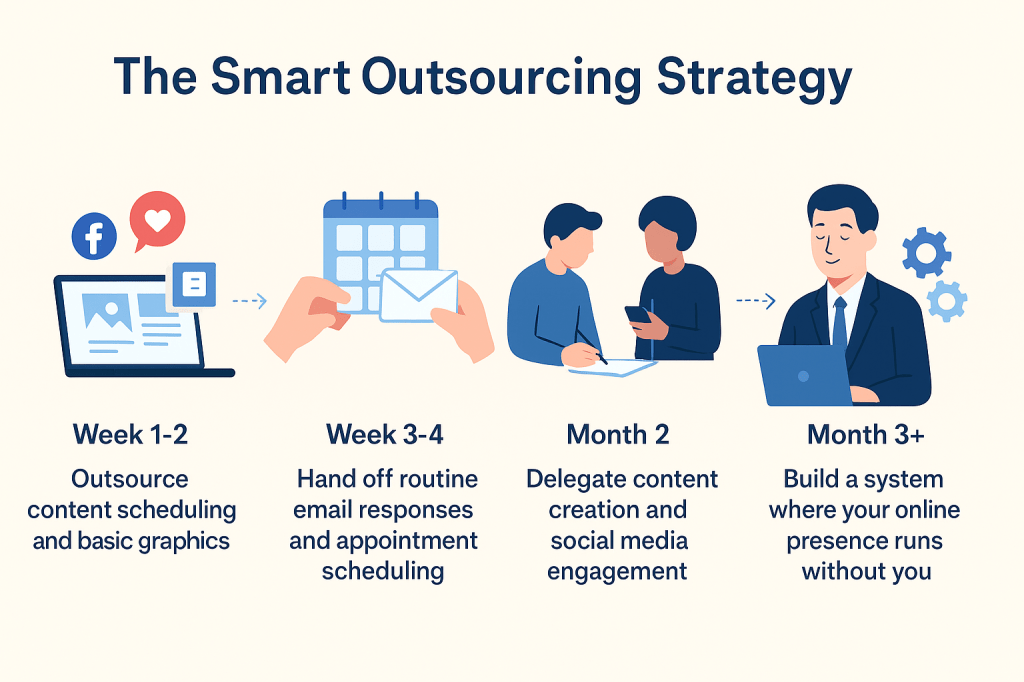
The Smart Outsourcing Strategy
The goal isn’t just to save time; it’s to create a sustainable practice where your presence is focused entirely on patient outcomes.
Start Small, Scale Smart:
- Week 1-2: Outsource content scheduling and basic patient FAQs via social media.
- Week 3-4: Hand off routine email and appointment requests.
- Month 2: Delegate content creation (blogging, simple video editing) and online engagement.
- Month 3+: Build a system where your online presence runs smoothly, giving you back hours for focused work and personal recovery.
The ROI of Getting Your Time Back
Imagine reallocating 15 hours a week from digital admin to patient-facing work:
| Metric | Calculation |
| Time saved on digital tasks: | 15 hours/week |
| Hourly rate for billable care: | $150/hour (conservative estimate) |
| Additional revenue potential: | $2,250/week = $117,000/year |
| Cost of outsourcing: | $2,000–4,000/month |
| Net gain: | $100,000+ annually |
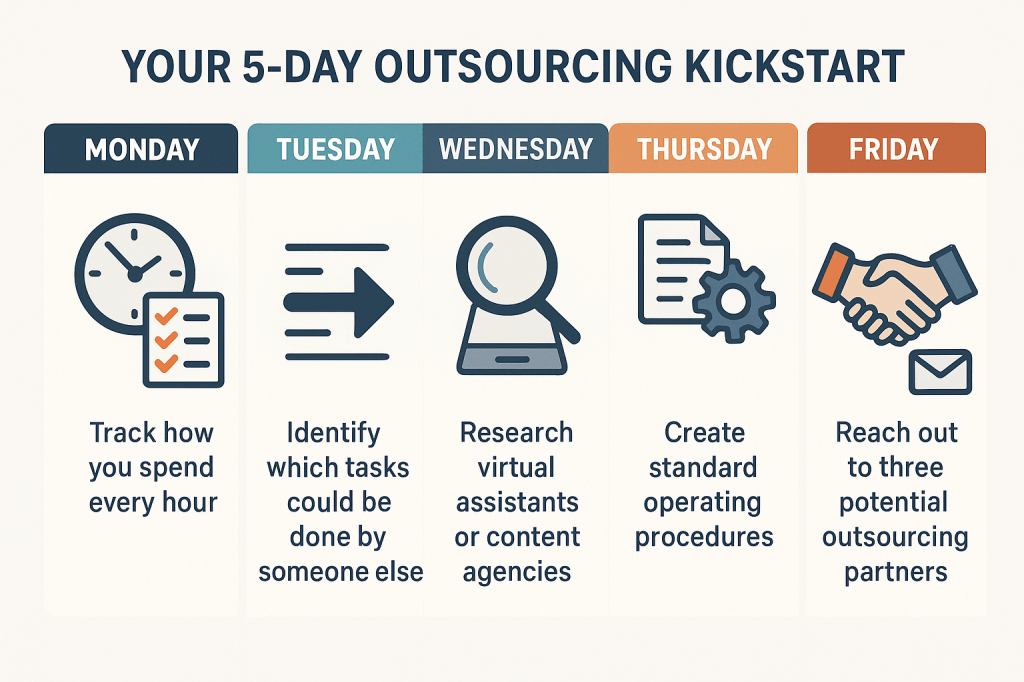
Your Action Plan for This Week
- Monday: Track how you spend every hour for one full workday.
- Tuesday: Identify every task that doesn’t require your specific medical knowledge.
- Wednesday: Research virtual assistants or specialized medical marketing agencies in your budget.
- Thursday: Create simple, step-by-step Standard Operating Procedures (SOPs) for the online tasks you want to delegate.
- Friday: Reach out to three potential outsourcing partners.
The Bottom Line
Your patients don’t pay you for your ability to post consistently on Instagram. They pay for your expertise and your attention.
Every hour you spend managing your digital façade is an hour you’re not spending with the humans who trust you with their health.
The most successful health professionals have learned this secret: They’re not trying to be everywhere online. They’re trying to be fully present for their patients.
Stop competing for likes. Start competing for lifelong loyalty and better patient outcomes.
 Free Your Hours
Leave a comment