

Guessing what patients think is risky. Asking them directly? That’s where the gold is.
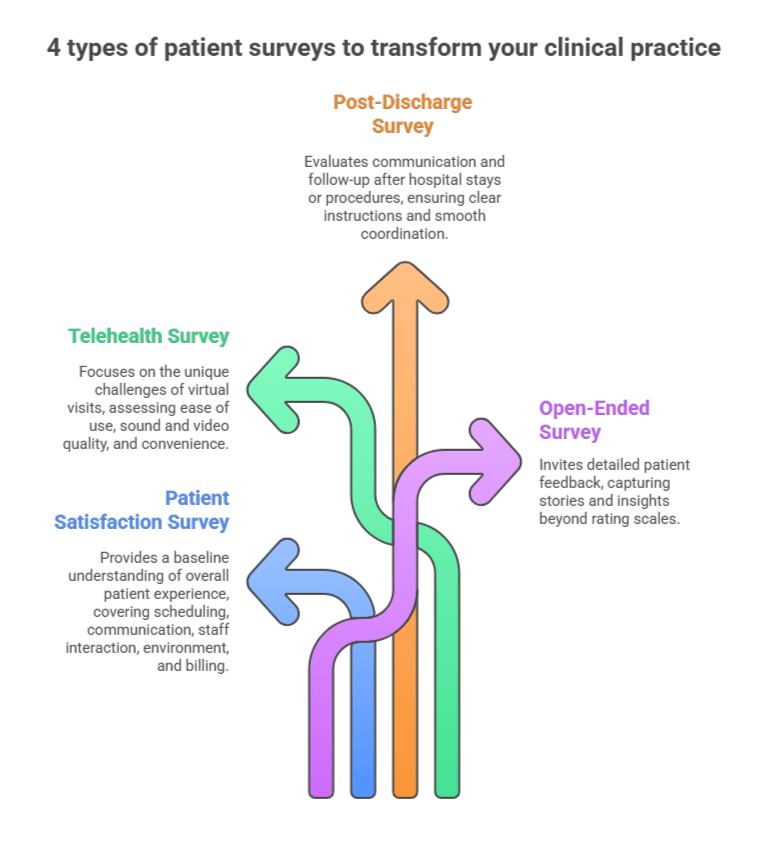
Surveys don’t just collect opinions—they uncover blind spots, highlight what’s working, and give you the roadmap for a better patient experience. The trick is to keep them focused. Instead of one giant questionnaire, target specific stages of the patient journey. Here are 4 types of patient surveys that can transform your clinical practice.
1. The Patient Satisfaction Survey (the classic)
Think of this as your baseline. It covers the overall experience and can be sent after each appointment or a couple times a year.
Good questions touch on:
- Scheduling: Was it easy to book? How long did they wait?
- Communication: Did the provider listen, explain clearly, and involve them in decisions?
- Staff interaction: Were your front desk and nursing staff welcoming and professional?
- Environment: Was the space clean, comfortable, and private?
- Billing: Did patients understand costs, insurance, and payments?
- Overall impression: Would they recommend you? (That’s where the Net Promoter Score comes in handy.)

2. The Telehealth Survey (virtual is different)
Video visits aren’t going anywhere, but they come with unique challenges. A focused survey shows you how patients really experience care when the screen is in between.
Ask things like:
- Was logging on easy?
- How was the sound and video?
- Did the provider feel just as attentive as in person?
- Was the convenience worth it?
3. The Post-Discharge Survey (after the hospital or surgery)
When patients leave a hospital stay or procedure, clear communication and follow-up matter more than ever. This survey helps you see if you’re getting it right.
Useful questions:
- Were follow-up instructions and medication details clear?
- Were test results shared quickly and understandably?
- Did your team coordinate smoothly with other providers?
4. The Open-Ended Survey (stories, not stats)
Sometimes a rating scale won’t cut it. Open-ended questions invite patients to share what stuck with them—for better or worse.
Try asking:
- What’s one thing we could do to improve?
- Was there something you especially liked or disliked, and why?
- Any final thoughts about your visit?
Best Practices: How to Get Honest, Useful Feedback
- Start with a goal: Are you checking on wait times, staff interactions, or follow-up care? Be specific.
- Keep it short: Nobody wants a 20-minute survey.
- Make it anonymous: Patients are more honest when they know their name isn’t attached.
- Automate the send: Email or text surveys while the visit is fresh in their mind.
- Act on the data: Look for patterns, fix the weak spots, and—this part matters—tell patients about the changes you made.
These are the best practices for patient surveys.
Bottom line: surveys aren’t busywork. Done right, they’re a direct line into your patients’ experience—and one of the fastest ways to build a practice people actually want to come back to.
Ready to put surveys to work in your practice? Start small: pick one type from the list above, send it to a handful of patients this week, and see what you learn. The sooner you start asking, the sooner you’ll know exactly where to improve. Need help? You can contact me here.
Which patient survey do you use most? Share your experience in the comments.
 Free Your Hours
Leave a comment